

How Retired Seniors Can Start and Grow a Successful Home Business
By Julie Morris, from JulieMorris.org, exclusively for Your Gray Matters
Contact Julie at juliem@juliemorris.org
When Carol Chen retired at 67 after 35 years as a school librarian, she had no intention of starting a business. She had her garden, her book club, and a spare bedroom full of bookbinding supplies she had collected over decades. But six months in, a familiar feeling set in. "I missed having something to work toward," she says. "Not the schedule. The purpose."
A granddaughter suggested Shopify. Carol had never heard of it.
Fourteen months later, The Dog-Eared Page, her online shop selling handcrafted literary gifts and custom-rebound books, had logged over 400 sales, found loyal customers in 22 states, and given Carol a reason to set her alarm three mornings a week. She built it from her spare bedroom, working no more than 15 hours a week, with a startup budget under $300.
Carol's story is not unique, but it is instructive. For retired seniors who want more than staying busy, retirement can bring an unexpected tension: plenty of freedom, but fewer built-in roles that provide purpose and momentum. Home-based businesses offer a realistic way to turn meaningful retirement activities into flexible entrepreneurship without giving up the pace and comfort that retirement deserves. The challenge is knowing what kind of work fits your current energy, responsibilities, and goals, while avoiding options that feel risky, overwhelming, or misaligned. With the right approach, senior empowerment can look like independence on familiar ground.
Understanding Fit Before You Choose a Home Business
Start with fit, not hype. A smart home business choice begins with a quick scan of common senior-friendly models, then a reality check on your own limits. Think service work like tutoring or consulting, product sales, creative work, and light online options, and then measure each against your time, energy, skills, and budget.
This matters because the "best" idea on paper can become stressful if it demands long hours, upfront spending, or constant hustle. A simple feasibility filter also protects your retirement plan, including basics like the 4 percent rule, so your business supports your life rather than threatening it.
Carol's path is a useful illustration. She rejected dog walking (hard on her knees), passed on a friend's suggestion to open an Etsy shop for quilts (too much inventory), and landed on Shopify because it let her sell both digital and physical products from the same simple dashboard, without needing a storefront or a car. What surprised her was how quickly she grew comfortable with the platform. "I watched three YouTube tutorials," she says. "That was enough to get started." The point is not that everyone should use Shopify. It is that the right fit depends on your body, your budget, and what you are already drawn to do.
Strengthen Your Money Skills With Structured, Flexible Learning
Once you know what kind of home business fits you best, it helps to feel steady about the money side, too.
If you want more confidence with business finances, you can sharpen your skills by going back to school and earning an online accounting degree. That kind of structured learning can deepen your business acumen while you launch, covering practical areas like marketing, economics, finance, and business ethics, so you are not guessing as you make decisions. If you would like to explore what that path looks like, the details are here.
With those fundamentals strengthened in the background, you will be ready to move into a simple launch plan for your space, setup, sales, and safety.



Set Up Your Home Business, Step by Step
This plan turns a good idea into a real, workable home business you can run with confidence. You will create a comfortable workspace, get the paperwork right, and build simple habits that protect your time, money, and peace of mind.
Step 1: Set up a calm, practical home office
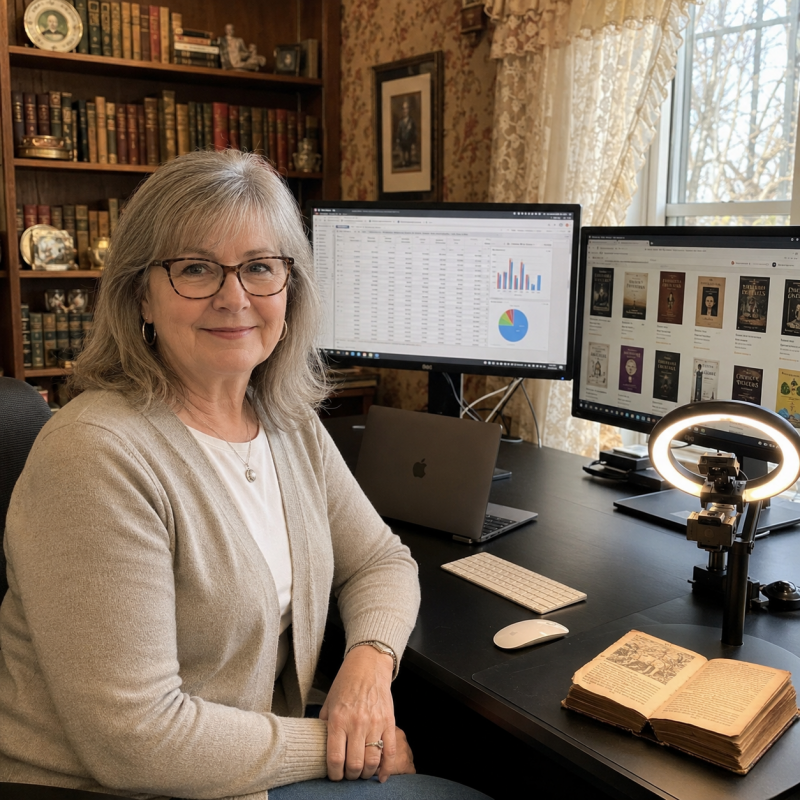
Start with one dedicated spot that signals "work time," even if it is just a corner of a room. Prioritize a supportive chair, good lighting, and a tidy way to store receipts and client notes so you are not hunting for things. Add a simple daily routine, because consistency beats long workdays. Carol set up a small table in her spare bedroom, added a ring light for photographing products, and taped a weekly schedule to the wall. Nothing expensive, nothing complicated.
Step 2: Choose your business name and complete registration basics
Choose a clear business name you can say easily over the phone, then check that you can use it in your state and online. Next, pick a simple structure and handle the required registrations so you can open accounts, invoice clients, and pay taxes without confusion. When in doubt, ask your local small business office what applies to your specific type of work.
Step 3: Separate personal and business finances immediately
Open a business checking account and use it for every business dollar in and out, even if your sales start small. Track income and expenses weekly with a spreadsheet or basic bookkeeping app so tax time stays calm. This separation also helps you see what is truly profitable and what is just keeping you busy.
Step 4: Do quick target market research before you market
Write down who you help, what problem you solve, and what people typically try before they find you. Then interview five to ten potential customers and listen for the exact words they use to describe the problem, because those words become your marketing message. Remember that 51.6 percent of U.S. businesses were home-based, so you are stepping into a well-traveled path, not inventing something strange.
Step 5: Pick simple marketing and compare insurance options
Choose two marketing channels you can sustain, such as local referrals plus one online option, and commit to them for 30 days before you judge results. At the same time, compare business insurance quotes and ask each provider what is covered for home-based work, including equipment, liability, and any customer visits. A small amount of protection can prevent one mishap from wiping out months of progress. Carol chose Pinterest (a natural fit for her visual products) and a weekly email to her book club contacts. Within 60 days, those two free channels accounted for most of her early sales.
You are building something steady, one smart decision at a time.
Home Business FAQs for Retired Seniors
A few quick answers to the concerns that stop many people from starting.
Q: What permits or rules apply to a home business in retirement? A: Start with your city or county rules for home occupations, plus any HOA or lease restrictions. Common limits involve signage, parking, customer visits, and noise. A quick call to your local planning or zoning office can save you weeks of guesswork.
Q: How do I know if I need a business license, an EIN, or sales tax registration? A: A local business license is common, an EIN is often helpful if you will hire help or want to avoid using your SSN, and sales tax registration applies when you sell taxable products in your state. Write down what you sell and how you get paid, then confirm requirements with your state's business portal.
Q: Can I start small without feeling "too old" for entrepreneurship? A: Yes, and you are far from alone. Data showing that 52.3% of business owners are 55 or older makes clear that age is not a barrier to ownership. Choose a service you can deliver comfortably and build from a predictable weekly schedule. Carol was 68 when she made her first sale. Her biggest concern was whether she could figure out the shipping software. She could.
Q: What should I do if tech, stamina, or confidence feels like my biggest hurdle? A: Simplify the setup and master one tool at a time, like email, invoicing, or a calendar app. Work in short blocks with breaks, and keep a written checklist so nothing lives in your head. If you can, ask a friend, grandchild, or community class to help you get over the first learning curve.

Get advice from your accountant, CPA or financial advisor

If you have any doubts, consult with a lawyer

At any age, the right home business will add joy to your life
Contact Julie at juliem@juliemorris.org
Q: How can I market on a tight budget without feeling pushy? A: Start with referrals and one free online "home base," like a basic Google Business Profile or a simple one-page site. Ask every happy customer for one review and one introduction, then repeat weekly. Consistency beats loud advertising.
You can move forward with clarity and keep your business gentle in your life.
Start a Simple Home Business Step Toward Steady Senior Success
It is easy for regulations, tech, and "what if I fail?" worries to make starting a home business feel heavier than it needs to be. The way through is an entrepreneurial mindset paired with steady confidence building: focus on what you can control, learn in small loops, and keep moving without needing perfection. With that approach, senior business success becomes a series of manageable choices instead of one daunting leap.
Carol would tell you the same thing, probably while packing a shipment of hand-stitched bookmarks headed to a teacher in Vermont. She is not a tech expert. She is not a marketing guru. She is a retired librarian who knew books, found a platform, and kept showing up three mornings a week. That was enough.
One small step taken consistently beats a perfect plan that never starts. Choose one small action today: write a simple offer statement, list your first three customers, or set a 30-minute work block. Let that be enough for now. That is how a home business becomes a source of stability, purpose, and connection in the years ahead.
Add comment
Comments